Friday, March 18, 2011

Considering a Career in Auditing or Accounting

One industry that is growing by leaps and bounds is the auditing and accounting industry. There are many great jobs available for people in this career field who have the appropriate educations. If you were to become an accountant, you would perform tasks such as keeping public records, making sure that taxes are filed appropriately, and helping a business to maximize their production. Whether you choose to work for the state government, federal government, for a business, or even for yourself, this kind of a career can be very rewarding.
Careers Available
The auditing and accounting field is a broad one, and there are many different careers that are available. First of all, there are public accounts who work for a variety of different people at the same time. You can either work with an accounting firm, or you can work on your own and enjoy the diversity of working with many different clients. You may also find yourself interested in a career in forensic accounting, which works with law enforcement agencies to uncover fraud and other crimes relating to money.
Another great career choice in this field is to become a management accountant. While this may take some years of hard work, it can be very rewarding. This type of accountant basically works with the rest of a management or executive team to help deal with various aspects of a business including planning, budgeting, and maximizing production levels within the company
There are many openings available for government accountants and auditors as well. Some of these types of positions may be working for the IRS and dealing with various aspects of taxes and even tax fraud. Other government positions may involve working with state or local governments to ensure that spending is done appropriately.
Preparation Needed
If you want to have a career in any portion of the auditing or accounting field, more than likely you are going to need a minimum of a bachelor's degree. Most places will require that you have at least 24 hours of your studies devoted to accounting classes as well. There are many other businesses and firms that will actually require that you have a Master's degree in either business or accounting.

Many accountants go on to get their CPA license from the state that they want to work in as well, which is very valuable. Most states will require that you have at least a bachelor's degree if you want to get your CPA, and many will require you to have even more hours than it takes to get a bachelor's degree. States have individual requirements, so if you are interesting in becoming a CPA it is usually a good idea to check into the requirements in your specific state.
Expected Wages
Becoming an accountant or auditor can provide you with great wages, especially if you do very well in school. As a general rule, most accountants will make between $30,000 and $80,000 each year. Most people who are just starting out usually make just under the $30,000 amount; however, the grades earned during school does seem to have a positive impact on how much you make when you are just out of school. Accountants who are serious about their jobs and work hard may make even more than $80,000 each year, with some even making up to $200,000 and better when they get into senior management positions. If you are willing to work hard, you can definitely make a great deal of money with this type of a job.
Companies to Consider
There are many different companies, both in the United States and Canada that are looking for qualified accountants and auditors to work for them. One very well known company in the United States that hires accountants and offers great pay and benefits is Oracle. They have various accounting positions, and they offer excellent health benefits, retirement benefits, and a great vacation plan. Another great U.S. based company that offers great jobs and competitive pay and benefits is Robert Half Management Resources. If you are looking for jobs in Canada, a couple great companies to consider include the National Bank of Canada and Ceridian Canada.


Forensic Auditing and Accounting

In the last several years, the term forensic auditing came into usage. What really does it specifically mean? The following article will discuss the importance of this process.
First off, let us define accounting. Accounting is the method of identifying, measuring, recording, and communicating economic information regarding an entity or an organization. This procedure permits informed judgments by users of the information. On the opposite side is forensic auditing which is a fairly new procedure under the field of auditing.
Crime was the reason why forensic auditing was born, most specifically economic crime. Economic crime has affected every country and industry and has escalated in recent times. The number of cases of fraud and corruption that are being reported has continued to grow. This is complicated by the challenges faced by the criminal justice system. Plus the general absence of the necessary skills to gather the proper audit evidence that is vital to criminal investigations.
According to information gathered from law enforcement and criminal justice agencies, the success rate for convictions are not good because prosecuting authorities lack skills and knowledge to provide effective investigation and prosecution. This is where forensic auditing comes in. Thus, forensic accounting gets its name from its association with a court of law. It is carried out to accomplish an objective that entails a judicial process.
An example of this is the computation of asset values in a divorce proceeding. Another is the assessment of damages due to the negligence of an auditor. Still another is fact-finding to see whether fraud had taken place, in what amount, and whether or not criminal proceedings are to be set off. And lastly, the collection of evidence in a criminal proceeding. Forensic accounting focuses primarily on both the evidence of financial transactions and reporting as found within an accounting system. It is the legal framework that allows such evidence to be suitable to the purpose of accounting.
Forensic accountants are chartered accountants that specialize in these types of cases and when there is a need for such evidence. Their job is to distinguish and interpret the evidences of both non-fraudulent and fraudulent transactions in the books and records of an accounting system. They also look out for the ensuing effect upon the accounts, inventories, and presentations. So, it is important that forensic accountants must first understand the regular accounting procedures and processes. In other words, forensic accounting is a specialization.

Accounting Basics: Public Accounting vs. Private Accounting

 Next in my Accounting Basics Series: Public Accounting vs Private (Industrial) Accounting.

The old accounting text book defines public accounting as: offering accounting and related services for a fee to companies, other organizations and the general public. The other services can include auditing, tax services and consulting. The certification offered for this type of accountancy is a Certified Public Accountant. The exam is prepared and administered by the American Institute of Certified Public Accountants (AICPA).
Private (or industrial accounting) is the opposite. Instead of providing services to many clients, a private accountant provides services to a single business. In a business consisting of many accountants, the 'head accountant is typically called the controller. Private accountants may or may not be CPA's. The National Association of Accountants does offer a certificate for private accountants called a Certificate in Management Accounting (CMA). Private accountants are often much more specialized and have to adapt to the needs of their company (controlling costs, budgeting, accounting systems, etc.)

Accounting principle- Accrual Basis

 Figures generated / kept in accordance to accounting principle is prepared on accrual basis. For instance, accountant record the provision for warranty ( based on estimate) even though there's no actual cash/ economic outflow yet.

In finance, cash basis figures are more relatively more valuable , as compared to accrual basis ( advocated by accounting principle), in order to value a business.

What do you think ? You prefer a an accrual method or cash method in valuing a business?

Accounting treatment for tax penalty


One of our Accounting & Audiitng blog reader inquired us the following:

" How should penalty on late repayment for tax been accounted for?"

Should it be a tax expense? Should it be other expenses?

To clarify: penalty imposed by inland revenue authority on late repayment for tax should not be accounted for as tax expense; it should be accounted for as administrative expense/ other expense.

Auditing Creditors

One of the procedures required to audit trade creditors account is to audit the creditors' statement received from the audit client's suppliers (i.e. external audit evidence).

In normal business circumstances, suppliers will send their monthly Statement of Account to their customers to inform the customers in relation to the outstanding balances. Hence, our audit client will , most likely, receive statement of account from the suppliers.

As part of audit procedure, we can check the suppliers' statement (received by our audit customers) against the creditors' balance recorded in their book. Discrepancies need to be investigated. Statement of account served as an external confirmation to check if our audit client's book has been prepared properly.

However, there are suppliers who do not have practices of sending out Statement of Account to their customers. In this instance, we can send external audit confirmation to the suppliers to confirm outstanding balances.

Saturday, November 20, 2010

Auditing Creditors- Creditor Turnover Analysis

 In audit, it's essential to form an expectation of the Company's results before we really drill into the details. We compare the actual Company's results to our expectation, and investigate the variances accordingly. This is the analytical procedures adopted by most of the audit Company. Besides, we also compare the result / financial position with prior period.

Creditors' turnover anlaysis is one of the auditing procedure we performed. What are we expecting from the audit client, in general. We expect the creditors turnover (days) to increase, as compared to prior period.

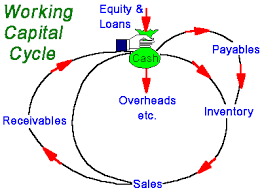
To illustrate, majority of our audit clients are affected by the economy turmoil. They are squeezing suppliers' credit ( by delyaing the repayment), in order to maintain the Company's working capital, as our audit client's working capital are most likely affected by the delay of repayment from customers.

We have formed an expectation, and we will compare the actual result with our expectation. Any unusual movements need to be identified.